

Creating a Sustainable Home: Eco-Friendly Living at Wabwino Villas in Lilongwe

The world is at a critical environmental point. Rising global temperatures and increasingly erratic weather patterns have made sustainable living an urgent priority. Eco-friendly housing is no longer a luxury—it is a responsibility shared by developers, homeowners, and communities alike.
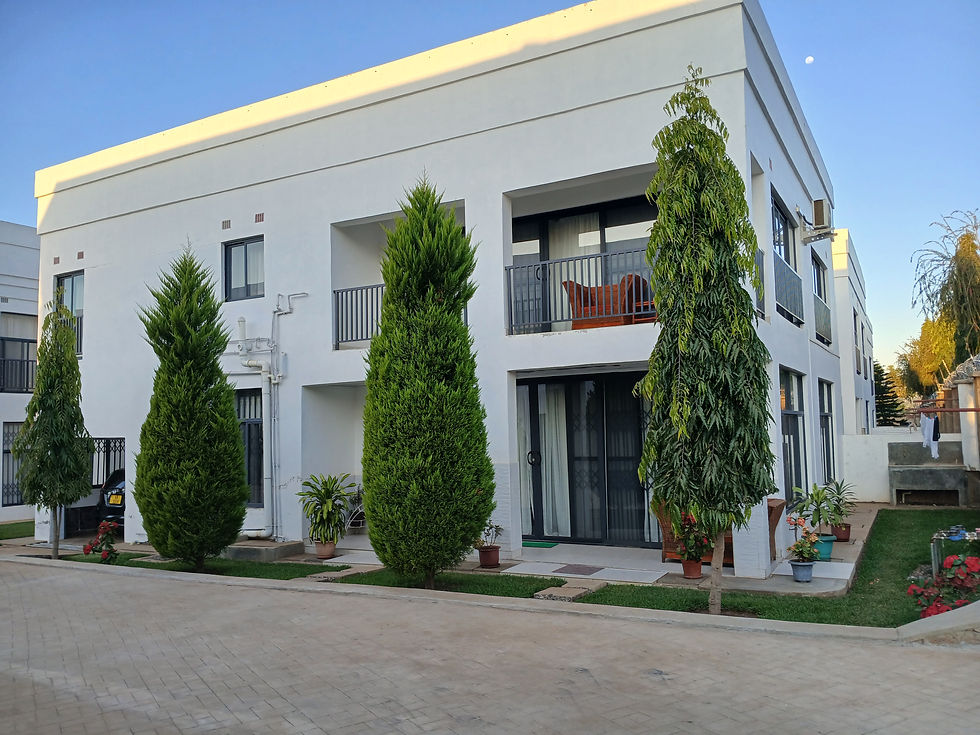
At Wabwino Villas, we have integrated sustainability into the design and daily management of our residential community in Area 10,Lilongwe, Malawi. Below are some of the eco-friendly practices we have implemented to promote green living and reduce our environmental footprint.
Hybrid Solar-Electric Geysers for Energy Efficiency
Each house at Wabwino Villas is fitted with a hybrid solar-electric geyser, designed to reduce electricity consumption.
Solar energy is the primary power source
Electricity is used only when sunlight is insufficient
This system ensures reliable hot water while supporting energy-efficient homes and reducing strain on the power grid.
Organic Manure and Sustainable Landscaping
We prioritise sustainable landscaping by avoiding synthetic fertilisers. Instead, biodegradable waste such as leaves and garden trimmings is converted into organic manure.
This practice:
Preserves soil nutrients
Supports healthy lawns and gardens
Reduces chemical pollution
The manure is applied across our green spaces, reinforcing our commitment to environmentally responsible property management.
Inverter Backup Power Systems
Each house is equipped with an inverter backup power system that stores electricity and provides essential power during outages.
The inverters support:
Lighting
Refrigeration
Selected electrical outlets
By using inverters instead of generators, we reduce fuel consumption, noise pollution, and emissions—key elements of eco-friendly housing solutions.
Green Spaces and Vegetation-Centred Design
At Wabwino Villas, every area not occupied by a house or driveway is dedicated to green spaces, including grass, trees, and flowers.
These spaces:
Improve air quality
Support mental well-being
Provide safe outdoor areas for children
Contribute to reducing the overall carbon footprint
Vegetation is a defining feature of our sustainable residential community.
A Practical Response to Climate Change
Climate change is not a distant concept. Erratic rainfall, heat extremes, and shifting weather patterns are already affecting our daily lives in Malawi. While global solutions require collective action, sustainable housing developments can play a meaningful role at the local level.
These initiatives reflect our approach at Wabwino Villas: practical, responsible, and forward-looking.


Comments